

domingo, 17 de marzo de 2013

domingo, 13 de enero de 2013
"La Cruz del Inglés" The Story
 |
| 1st Foot Guards embarking for the Peninsula. |
Las
famosas Guerras Napoleónicas desarrolladas lo largo de toda Europa, y
en concreto la Peninsular War, supusieron la incorporación al ejército
de cientos de miles de británicos cuyas vidas apenas dejaron huella en
la historia oficial, pero que al conocerlas y tenerlas en cuenta
podríamos sin duda recomponer el espíritu de toda una época.
The
famous Napoleonic Wars, which took place throughout Europe, and in
particular the Peninsular War, led to the enlistment of hundreds of
thousands of young British men whose lives scarcely left their mark on
history, however, once we learn about who they were, this undoubtedly
helps to piece together the spirit of that period in time.
El
caso que nos ocupa es el de uno de esos militares británicos de los que
no hablan los grandes cronistas. Un nombre propio que, a pesar de no
evocar la gloria de Wellington ni la fama de Graham, terminó salvándose
casualmente del inevitable olvido al que estaba abocado. De hecho, al
menos de alguna manera todavía es recordado en Alcalá de Guadaíra, la
pequeña ciudad del sur de España donde fueron a reposar sus restos.
The
case in question is about one of those British soldiers who is not
mentioned by the great chroniclers. His name, although it does not evoke
Wellington’s glory or Graham’s fame, was rescued, by chance, from
falling into oblivion. In fact, it is still recalled in Alcalá de
Guadaíra, this small town in the south of Europe where his body was laid
to rest.
Si
no hubiera fallecido a consecuencia de la toma de Sevilla en1812, el
teniente coronel John Scrope Colquitt, de treinta y siete años, que
mandaba la light company del 3er. Batallón del 1st. Regiment of Foot
Guards, quizás hubiera tenido su propio protagonismo en las famosas
acciones bélicas que se desarrollaron después. Eso desgraciadamente
nunca lo sabremos. No obstante, no sería descabellado imaginar que, de
no morir, pudiera haber ganado los laureles de la fama en Waterloo, por
ejemplo, como sí lo hizo su primo el capitán Goodwin Colquitt, de su
mismo regimiento, en aquella heroica acción que protagonizó cuando
devolvió a los franceses una granada enemiga, como si de una pelota de
cricket se tratara, salvando a decenas de sus hombres.
Should
he not have died after the capture of Sevilla in 1812, Lieutenant
Colonel John Scrope Colquitt, who at the age of thirty-seven years was
in charge of the light company of the Third Battalion of the First
Regiment of Foot Guards, might well have played a leading role in the
famous events which were later to unfold during that war. Unfortunately,
this will never be known. However, it would not be farfetched to
imagine that, had he not died, he might have gained fame, for example,
at Waterloo, as did his cousin Captain Goodwin Colquitt. Captain
Colquitt, who belonged to the same regiment as his cousin John Scrope,
heroically picked up a live French shell, as if it had been a cricket
ball, and threw it back towards the enemy lines, saving the lives of
dozens of his men.
Pero
el teniente coronel Colquitt, al contrario que su primo, no pudo
llegar a Waterloo; su nombre jamás trascendió de las interminables
listas de bajas en el frente de España. Al menos, a diferencia de la
mayoría de sus compatriotas caídos en combate, tuvo la suerte de recibir
una digna sepultura con una lápida loando su nombre y su heroica gesta
final. Hecho que motivó que aquel lugar donde se enterró conservara
desde entonces para los habitantes del pueblo la memoria de un extraño
oficial inglés caído en combate.
But
Lieutenant Colonel Colquitt, unlike his cousin, never reached Waterloo,
he was just another of the endless list of casualties on the Spanish
front. However, in contrast to the majority of his fellow countrymen who
died in combat, he was buried in style and a tombstone was placed at
his graveside recalling his life and his final heroic feats. His resting
place was to become for the inhabitants of the town a memorial to a
strange English officer who died in combat.
Un
pequeño grupo de historiadores locales pensamos hace algún tiempo que,
entre otras iniciativas, la mejor manera de celebrar el bicentenario de
aquel suceso sería arrojando un poco de luz sobre su protagonista. Los
únicos datos que conocíamos de él eran los que contenía su epitafio,
que para colmo, hacía décadas que había desaparecido del emplazamiento
original y no se sabía su paradero o si ni siquiera seguía existiendo.
Los anales históricos locales contaban que poco después de la liberación
de Sevilla, a finales de agosto de 1812, las tropas inglesas que
participaron en esta acción fueron destinadas a Alcalá de Guadaíra, tan
solo distante unas pocas horas de marcha de la ciudad. En Sevilla
permanecieron únicamente los heridos graves, como fue el caso del
teniente coronel Colquitt. Aunque salió indemne de la batalla, incluso
con el reconocimiento expreso a su arrojo en el parte de guerra
correspondiente, sufrió al concluir la lucha un serio ataque de fiebre
como consecuencia de la fatiga y de las altas temperaturas de aquel día.
Finalmente murió después de una semana de convalecencia y, cuando la
noticia llegó a Alcalá, su compañía reclamó el cadáver para rendirle los
honores militares que se merecía. Los ingleses enterraron al teniente
coronel Colquitt entre salvas y oraciones, bajo una sencilla cruz que se
erigía a la entrada del pueblo. De esta manera acababa la peculiar
historia sobre el origen de lo que desde entonces se conoció como La Cruz del Inglés.
A
group of local historians decided some time ago that, as well as other
initiatives, the best way to celebrate the bicentenary would be to shed
some light on this character. The only information we had was that which
was on his epitaph and, to make matters worse, it had been removed from
its original site decades ago and no one knew where it was or whether
it still existed. The local historical annals state that shortly after
the liberation of Sevilla, at the end of August 1812, the British
troops, which had taken part in the action, were sent to Alcalá de
Guadaíra, a couple of hours march away from the city. Only the seriously
injured were left in Seville, as was the case of Lieutenant Colonel
Colquitt. Although he was not injured in the battle, and indeed was
praised in the battle reports for his fearlessness, once the battle was
over, he fell ill with fever due to fatigue and the high temperature on
that day. He died a week later and when the news reached Alcalá, his
company asked for his body to be sent so that they could bury him with
full military honours as he deserved. The British troops buried
Lieutenant Colonel Colquitt with salvos and Anglican funeral rites next
to a wayside cross at one of the entrances to the town. This is the
origin of what has been known since then as La Cruz del Inglés (The
English Cross).
Pero,
¿Quién era realmente este personaje al que hacía referencia un viejo
topónimo local y cual fue su vida antes de llegar aquí?
But, who was this character who gives rise to this local place name, and what was his life like before he came here?
Desenterrar
la biografía de un militar inglés sin ninguna relevancia especial,
caído hace dos siglos, era algo que a priori nos parecía una ardua y
desesperanzadora tarea de investigación histórica del más alto nivel.
Contra todo pronóstico, poco a poco y sin más medios que nuestro empeño
por conocer quién era ese misterioso personaje, la tarea que emprendimos
fue lanzando sus primeros frutos. Para ello fue providencial
encontrarnos con determinadas pistas documentales tremendamente valiosas
para nuestra búsqueda, como por ejemplo el libro que un bibliotecario e
historiador de Manchester, Ernest A. Axon, escribió en 1892 titulado Bygone Lancashire,
donde dedica todo un capítulo a la familia del teniente coronel
Colquitt. También fuimos muy afortunados en aquellos comienzos en contar
con la colaboración de una serie de personas sin las cuales nos hubiera
sido imposible que la investigación hubiera sido tan efectiva, como por
ejemplo Richard Dalglish, de la Liverpool and South-West Lancashire
Family History Society,
At
first, we considered that it would be an uphill and hopeless task, a
most difficult historical investigation, to unveil the biography of this
English officer who seemed to have no special renown and had died two
hundred years ago. Against all odds and merely with our sheer
determination to discover who this mysterious character was, our search
gradually began to give its first fruits. It was providential to find
certain valuable clues in documents such as Bygone Lancashire, written
in 1892 by the Manchester librarian and historian Ernest A. Axon, in
which he wrote a whole chapter about Lieutenant Colonel Colquitt’s
family. We were also very fortunate to receive the help and cooperation
of a series of people, to whom we are eternally grateful, such as
Richard Dalglish from the Liverpool and South-West Lancashire Family
History Society.
John
Scrope Colquitt nació el 31 de marzo de 1775 en Liverpool, en el seno
de una familia de clase alta con una amplia tradición de funcionarios de
aduana, regidores municipales y abogados. Su padre se llamaba John, su
madre Bridget (de soltera Martin) y sus hermanos menores, Samuel Martin y
Bridget. Se educó en Macclesfield y Rugby, y con diecisiete años fue
admitido en el Trinity College de Cambridge. A pesar de que apenas había
antecedentes familiares, por aquella época John, su hermano Samuel y el
primo de ambos, Goodwin, abandonan sus estudios para servir en el
ejército y en la marina. El 14 de mayo de 1794, John Scrope Colquitt, de
diecinueve años, es recibido como Ensign
en el regimiento más elitista y afamado de la infantería británica, el
1st. Foot Guards. Se casó con Jane Ane Lewin, hija del High Sheriff del
condado de Mayo, perteneciente a una familia de terratenientes ingleses
de la costa oeste de Irlanda y viuda del capitán Horsfall, con quién
había tenido un hijo llamado Henry. Con ella tuvo a Georgina Mary y a
Ernest August.
John
Scrope Colquitt was born on 31st March 1775 in Liverpool, into a
wealthy family of customs collectors, local politicians and attorneys.
His father was called John, his mother Bridget (née Martin) and his
younger brother and sister, Samuel Martin and Bridget. He studied at the
boarding schools in Macclesfield and Rugby and at seventeen years of
age was admitted to Trinity College in Cambridge. Although there was
little family tradition, around this time John, his brother Samuel and
their cousin Goodwin left their studies to join the army and navy. On
14th May 1794, when he was nineteen years old, John Scrope
Colquitt, became an Ensign in the most elitist and famous regiment of
the British Infantry, the First Foot Guards. He married Jane Anne Lewin,
daughter of the High Sheriff of the County of Mayo, who belonged to a
family of English landowners on the west coast of Ireland and was the
widow of Captain Horsfall, with whom she had had a son called Henry.
They had two children, Georgina Mary and Ernest Augustus.
El
teniente coronel Colquitt no tuvo mucho tiempo de disfrutar de su
familia por culpa de la guerra. Durante los años 1806 y 1807, los 1st
Foot Guards estuvieron en Sicilia. Seguidamente participaron en
distintas acciones en Portugal y el norte de España hasta que, en marzo
de 1810, embarcaron hacia Cádiz para apoyar la defensa de la ciudad ante
el sitio francés. El 5 de marzo de 1811 John Scrope Colquitt
participaba con su regimiento en la batalla de La Barrosa. Algunas
fuentes militares británicas incluyen su nombre erróneamente entre los
heridos en aquella acción, aunque en realidad fue su primo, el capitán
Goodwin Colquitt, el que causó baja. De hecho, debido a la gravedad de
su estado, este último fue evacuado a Inglaterra y no volvió a España
hasta 1813, según cuenta él mismo en su diario. En cambio John, después
de la batalla permaneció en Cádiz hasta el final del asedio.
Precisamente durante esa larga estancia en la ciudad sitiada, se
entretuvo dibujando una acuarela donde comparaba las bocamangas que
llevaban los uniformes de los distintos ejércitos inglés y español. El dibujo está fechado en 1811 y se titula A
Delineation of the distinctions of rank in the dress of the Spanish
Troops, with the same added to the different ranks and Regiments in the
British Service.
Lieutenant
Colonel Colquitt had little time to enjoy being with his family because
of the war. In 1806 and 1807 the First Foot Guards were in Sicily. They
then took part in different actions in Portugal and the North of Spain.
In March 1810, they embarked for Cadiz where they helped defend the
city against the French siege. On 5th March 1811, John Scrope
Colquitt fought with his regiment at the Battle of Barrosa. Some
British military sources mistakenly include him among the list of the
injured, although it was really his cousin, Captain Goodwin Colquitt,
who was so seriously injured that he was sent home to England and did
not return to Spain until 1813, as he himself reports in his diaries.
However, John Scrope returned to Cadiz after the battle and remained
there until the siege was lifted. During his long stay in the besieged
city, he did a water painting in which he compared the cuffs on the
uniforms of the British and Spanish armies. The painting is dated 1811
and is titled: A Delineation of the distinctions of rank in the dress
of the Spanish Troops, with the same added to the different ranks and
Regiments in the British Service
Tras
la retirada del asedio francés de Cádiz, un ejército integrado por
españoles, británicos y portugueses se lanzó a la liberación de Sevilla,
la ciudad más importante y poblada de todo el sur de España. El momento
más decisivo de esta operación fue la llamada batalla del Puente de
Triana, el 27 de agosto de 1812, en la que John Scroope Colquitt tuvo un
papel destacado y fue de los primeros en atravesar el puente flotante
sobre el río Guadalquivir que separaba las murallas de Sevilla del
popular barrio de Triana. Fue su última batalla.
After
the French withdrawal from Cadiz, an army made up of Spanish, British
and Portuguese troops headed to liberate Sevilla, the most important
and populated city in the south of Europe. The most decisive moment of
that operation was the Battle of the Bridge of Triana, on 27th August
1812, in which John Scrope Colquitt played an important role and was one
of the first to cross the floating bridge on the River Guadalquivir
which separated the city walls of Sevilla from the popular district of
Triana. This was his last battle.
El 5 de mayo 2012 se inauguró un sencillo monumento conmemorativo en
Alcalá de Guadaíra, en el mismo sitio donde se enterró nuestro héroe. De
este modo, una réplica de su lápida original vuelve a darle vida y
otorga sentido para las sucesivas generaciones al viejo nombre de La
Cruz del Inglés.
.
On
5th May 2012, a simple commemorative monument was inaugurated in
Alcalá de Guadaíra, at the very site where our hero was buried. In this
way, a replica of the original tombstone recalls for future
generations who this man was and the reason why this place is known as
La Cruz del Inglés (The English Cross).
martes, 1 de enero de 2013


lunes, 31 de diciembre de 2012
BICENTENARY YEAR ENDS WITH LOTTERY WIN

The
first draw of the modern day Spanish lottery took place in Cadiz on March 4th
1812 when John Scrope Colquitt was stationed with the British troops in that
city and fifteen days before the proclamation of the first Spanish Constitution, popularly known as “La Pepa”. The aim of the lottery was to
obtain funds to help finance the war against the French invaders, rather than
raising taxes on ordinary people. John
Scrope Colquitt died and was buried
later that year in Alcalá de Guadaíra. Two hundred years later, on May 5th
2012, a monument was inaugurated in his honour in the Cruz del Inglés in the
presence of the Colquitt-Craven family and on September 5th 2012, at the same
spot, the bicentenary of his death was commemorated. On December 22nd
2012, just a couple of hundred metres away in the local Salesian School, the
Holy Week brotherhood of El Rosario won one of the fifth prizes in the Spanish
Christmas Lottery. The number 55448 left 5.4 million Euros in the town as 900
families won 6000 Euros each. A happy note on which to end a memorable year.
El primer sorteo de la
lotería moderna se celebró en Cádiz el 4 de marzo de 1812, coincidiendo con la
presencia en la ciudad de John Scrope
Colquitt y las tropas británicas y
tan solo 15 días antes de proclamarse la primera constitución española,
popularmente conocida como “La Pepa”.El objetivo entonces fue recaudar dinero
para financiar la guerra contra los invasores franceses sin necesidad de
incrementar los impuestos de los contribuyentes. John Scrope Colquitt murió
y se enterró más tarde aquel año en Alcalá de Guadaíra. Doscientos años más
tarde, el 5 de mayo de 2012, se inauguró un monumento en su honor en La Cruz
del Inglés en presencia de la familia Colquitt-Craven y el 5 de septiembre de
2012, en el mismo lugar, se conmemoró el bicentenario de su muerte. El 22 de
diciembre 2012 a unos cientos de metros en la escuela de los Salesianos, a la Hermandad
del Rosario le tocó uno de los quintos premios de la Lotería de Navidad. El
número 55448 dejó 5,4 millones de Euros en la ciudad y novecientas familias fueron
agraciadas con 6000 Euros cada una. Una alegría para despedir un año memorable.
domingo, 11 de noviembre de 2012
Remembrance Sunday
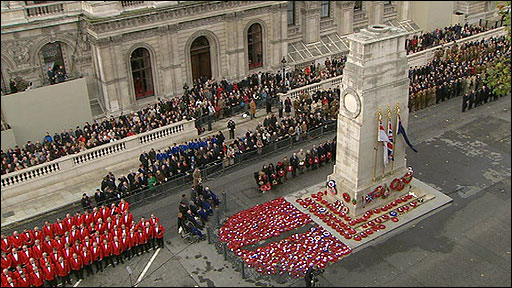
Today, Sunday 11th November, all the British, irrespective of their colour, creed or political belief, join together to recall all those British soldiers who have died or been injured in wars away from their homeland. We recall all these men and women with the symbol of the poppy and wreaths of poppies are laid in their memory. Today we recall Lt Colonel John Scrope Colquitt who died two hundred years ago, far from his native Liverpool.
Hoy , domingo 11 de noviembre, todos los británicos, sea cual sea su color, religión o creencia política, se unen para recordar a todos aquellos soldados británicos que han muerto o han resultado heridos en guerras lejos de su patria. Recordamos a todos aquellos hombres y mujeres con el símbolo de la amapola y colocamos coronas de amapolas en su memoria. Hoy recordamos al teniente coronel John Scrope Colquitt que murió hace doscientos años, lejos de su ciudad natal de Liverpool.

sábado, 13 de octubre de 2012
El Museo de Alcalá de Guadaíra acoge la presentación de 'La Cruz del Inglés John Scrope', de Arturo Vinuesa

El Museo de Alcalá de Guadaíra ha acogido la presentación del libro 'La Cruz del Inglés John Scrope', de Arturo Vinuesa, en un acto que estuvo presidido por la Delegada de Patrimonio, Laura Ballesteros y miembros de la Asociación 'La Cruz del Inglés'.
Se trata de una novela histórica prologada por la alcaldesa de Cádiz, Teófila Martínez, y que se inspira en la vida de John Scrope Colquitt y su destacada participación en diversas acciones bélicas de la Guerra de la Independencia, así como su trágico final en un hospital de campaña a las afueras de la Alcalá en 1812.
Arturo Vinuesa Parral es coronel retirado del Estado Mayor de la Defensa. Fue agregado militar en las embajadas de Bagdad e Islamabad y posteriormente Jefe de Operaciones de la Misión de la Unión Europea en la guerra de los Balcanes.
Doctor en Ciencias Políticas, ha escrito varias obras sobre Inteligencia Estratégica, los conflictos de Afganistán, la antigua Yugoslavia, el Islamismo y Oriente Medio. Es autor también de 'Ambición de Poder' (2007) y 'Crimen de Estado' (2009).
El autor conoció la historia en una conferencia ofrecida por los miembros de la asociación 'La Cruz del Inglés 2012' en Chiclana de la Frontera (Cádiz), en el marco de las actividades culturales que se organizaron el pasado año con motivo del bicentenario de la batalla de Chiclana o de la Barrosa.
Como su título indica, la obra trata sobre la particular historia de uno de los muchos participantes en aquella batalla, cuyos principales detalles habían sido rescatados doscientos años después por unos historiadores locales.
Arturo Vinuesa, al igual que muchos otros asistentes, quedó impresionado por el relato de cómo a partir de un topónimo popular se había reconstruido la biografía del personaje que lo motivó. Desde ese mismo momento pensó la idea de escribir una novela sobre la figura John Scrope Colquitt.
En el transcurso de la presentación del libro, el autor tuvo palabras de agradecimiento para el Ayuntamiento de Alcalá de Guadaíra "por su implicación en todos los actos organizados para honrar la memoria de John Scrope Colquitt", a los miembros de la asociación "por la ayuda prestada y el interés mostrado en esta novela".
Esta presentación pone fin a todos los actos organizados en torno al bicentenario de la muerte del teniente coronel John Scrope Colquitt, como han sido la creación de un monolito en su memoria en la Cruz del Inglés, unas jornadas de patrimonio y la exposición 'La Cruz del Inglés: 200 años de leyenda urbana' abierta en el museo de la ciudad desde el pasado mes de mayo.
Suscribirse a:
Entradas (Atom)